Posted by Hopwood Wendy
40th Anniversary of Glenn Chapman’s Central Park Crown
Date: 3rd March 2026
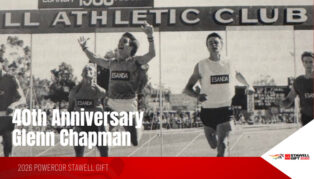
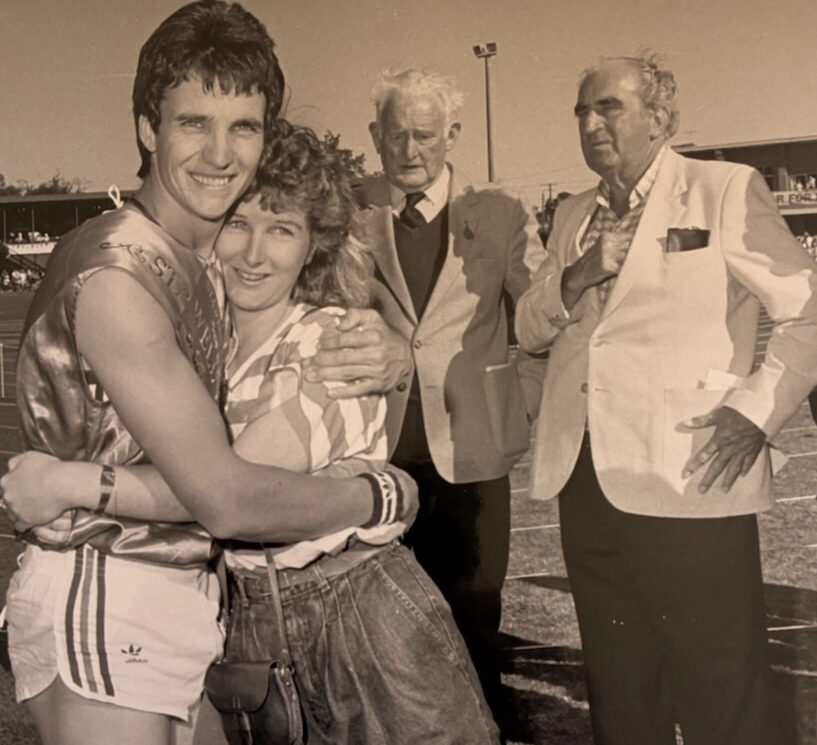
Forty years ago, on Easter Monday 1986, Glenn Chapman crossed the line at Central Park and etched his name into the history of the Stawell Gift.
The image of that moment, chest forward, arms in the air, remains one of the enduring photographs in the Stawell Gift Almanac. But behind the snapshot lies a story of relentless preparation, homesickness and a runner determined to fast-track a two-year plan.
On the Friday night before the Gift, Chapman and Rob Ballard were installed as equal favourites, both off a novice mark of seven metres, traditionally a sign of who would likely contest the final.
“On the Saturday of the heats I ran 12.21 and Rob clocked the fastest time, around 12.09,” Chapman recalled. “On the Monday I ran about 12.20 again and Rob ran a similar 12.09. At that stage I had to improve roughly a metre to be competitive in the final.”
He improved by two.
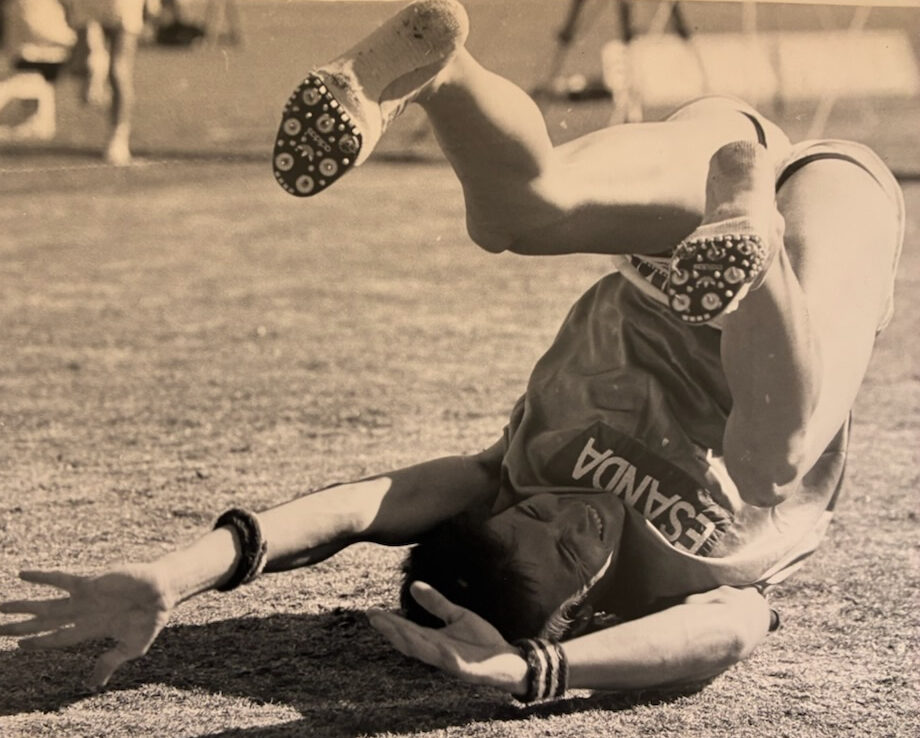
“I knew I had something in reserve and was determined to run my best race in the final,” he said. “Fortunately, I was able to lift and crossed in 12.01. That finishing photo was sheer relief, a year of six days a week training and the incredible pressure of the event was finally over. I don’t believe I would have won without the meticulous preparation from Neil King and Evan Armstrong.”
Chapman’s path to Stawell began in Albury, where he was playing football when former professional runner Ray Thomas spotted him during pre-season training. A meeting with King, Armstrong and Gary Gray followed, and at 22 he made the move to Melbourne to chase elite competition.
The plan was patient and calculated – target the 1987 Gift.
“I’m a country lad and I really struggled with homesickness,” Chapman said. “When Neil and Evan said it was a two-year plan, I was determined to make it one. I committed 100 per cent, thinking I’d get it done and move back to Albury.”
Instead, he won in 1986 and stayed in Melbourne for five years. Preparation was uncompromising. Chapman lived with King and his wife Mary for 12 months leading into Stawell.
“Training was intense – two to three hours a night, six days a week. There was no escaping it,” he said. “I remember turning up to training one night with a bad flu and saying I didn’t think I could train. Neil said, ‘That’s fine, but if you get beaten by millimetres, was it that one session that cost you?’ I threw my spikes on the ground, swore and did the session.”
Mental preparation was just as detailed. Four weeks before the Gift, King sent Chapman to a hypnotherapist for mental rehearsal to manage the nerves that inevitably accompany a Stawell final.
“Nerves play a massive role,” he said. “Because of that preparation, a lot of the specific details of the race I don’t remember. I do remember a fly flying into my eye at the 50-metre mark in the final, which stunned me for a second.”
Even that could not stop him.
The carnival atmosphere in 1986 carried extra intrigue, with high-profile names present across the weekend including Warren Edmonson and Kipper Bell. But Chapman’s focus was narrow.
“To be perfectly honest, I gave no thought to any other runner apart from Rob Ballard. I knew the race was between Rob and myself.”
When he crossed the line, belief replaced doubt.
“To win a race like the Stawell Gift gave me the belief that you can achieve anything you put your mind to, as long as you are prepared to commit and dedicate yourself to the task at hand,” he said. “It’s very humbling to be included among the winners of such a prestigious event and to be a tiny part of history.”
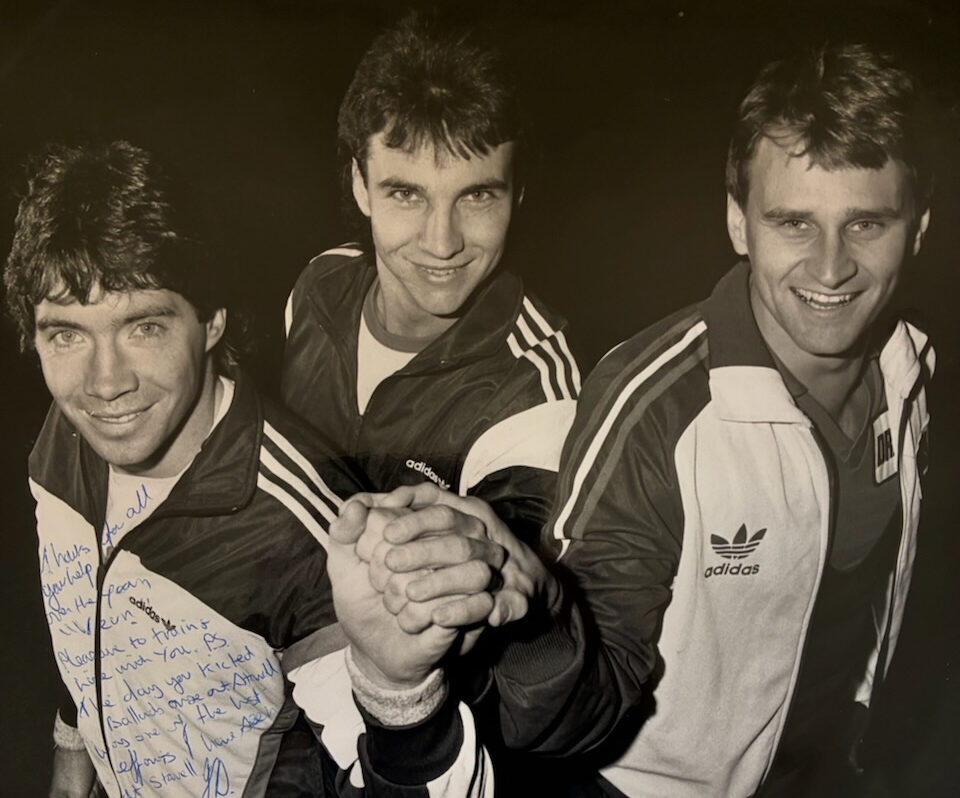
After the triumph, King’s instruction was immediate – park the professional success and turn to the amateur stage. The stable was reduced to an elite core: John Dinan, the 1980 Gift winner and Australian 200m record holder; Chris Perry, the 1982 Gift winner and national 100m champion; and Olympic silver medallist Gary Honey.
“I was in pretty elite company,” Chapman said.
But recurring hamstring injuries surfaced at the worst possible times. Over the next three years, promising amateur campaigns ended with torn hamstrings at the business end of seasons. Major surgery in 1988 proved unsuccessful, curtailing what might have been a lengthy second chapter.
Still, the 1986 sash endures. Chapman grew up watching the Stawell Gift on Easter Monday, captivated by the spectacle.
“Not in my wildest dreams did I think I’d be in a position to win it,” he said. “It’s amazing how many people know or have heard of the Stawell Gift, even if they don’t follow athletics. It’s like the Melbourne Cup – everyone’s heard of it, even if they don’t know who won.”
He believes the addition of the Women’s Gift has strengthened the carnival and broadened its appeal for modern audiences.
Four decades on, Chapman has attended most Stawell carnivals since his victory, though he won’t be there this Easter.
Time has softened the pressure of that famous Monday, but not the meaning.
“It’s very humbling,” he said again. “To be part of Stawell Gift history, even in a small way, is something I’ll always treasure.”
Forty years later, that win remains more than a photograph. It stands as proof that belief, preparation and a refusal to wait for next year can rewrite any plan.
Link to Glenn’s winning video from 1986 here:
Comments are closed.


